


Amplifying our Veteran's Voices!
Research by

We asked 1,623 Veterans and Military Families about their Vet Tix Experiences:
%
Report Improved Wellbeing
%
Report Stronger Family Bonds
/10
Community Connection

Vet Tix asked us a simple question: Is what we do actually working?
Since 2008, Vet Tix has distributed over 34 million tickets to 2.5 million verified members. The premise is straightforward: give veterans and their families access to live events (concerts, games, performances) and those shared experiences will support wellbeing, strengthen families, and rebuild connection to community.
But premise is not proof.
Vet Tix wanted to know what their members actually experience, where the gaps are, and what could be done better. To find out, we surveyed 1,623 registered members in October and November 2025.
What we found was encouraging, and complicated. The vast majority of respondents report meaningful impact on their wellbeing, their families, and their sense of belonging. But the data also surfaces gaps: community connection runs high while actual friendships lag behind, nearly one in five respondents face anxiety or PTSD-related barriers at events, and the veterans who benefit most are the ones who keep coming back, raising questions about what happens to those who don't.
This report presents all of it: the patterns in the data, the themes in their stories, and the opportunities that emerge from both.
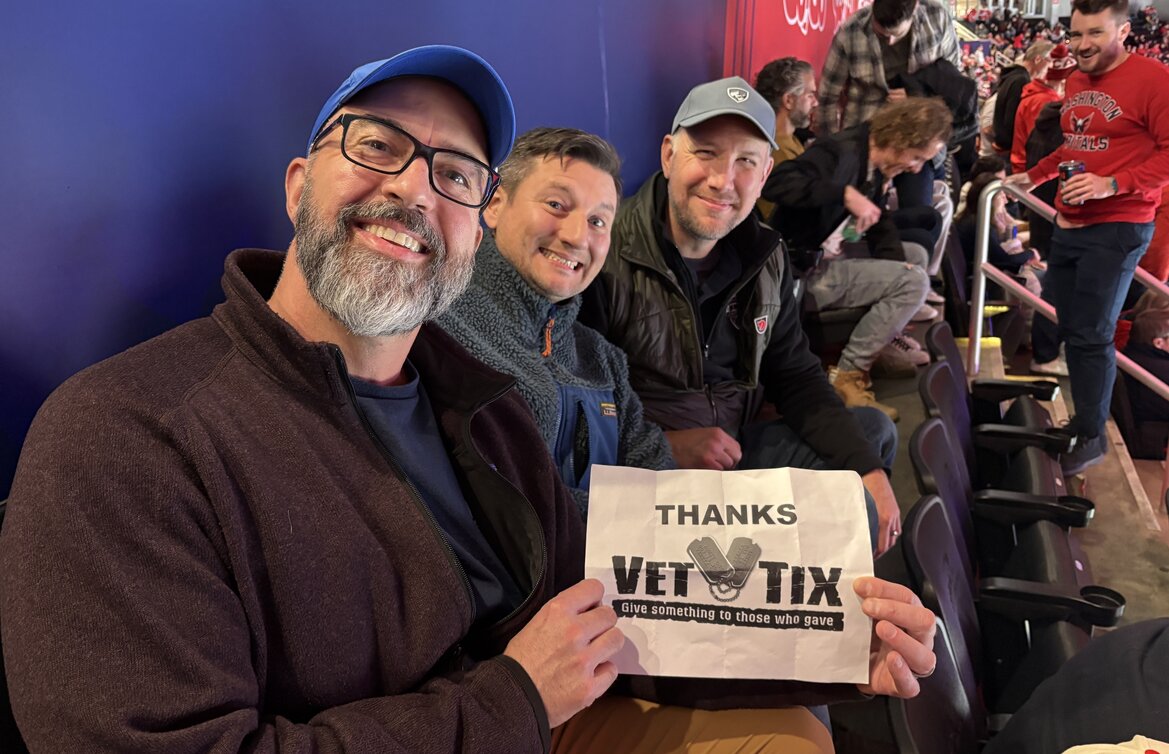
KEY FINDINGS
1
Reported impact is remarkably high
90% of respondents say attending events has positively affected their wellbeing, with 54% selecting "greatly improved," the strongest option available. Less than 1% reported any worsening.
2
Family is at the center of the experience
86% report strengthened family bonds. In open-ended responses, family was the most common theme, appearing in 40% of memorable experience descriptions without being prompted. Veterans who report significantly strengthened family bonds are far more likely to report greatly improved wellbeing (79% vs. 54% baseline).
3
Community connection scores are strong, but friendship formation lags
Mean community connection score is 8.58/10, but new friendships score only 6.63/10, a nearly two-point gap. Veterans feel part of something larger but aren't forming individual relationships at the same rate.
4
More events correlate with better outcomes
Veterans who attended 10+ events report 'greatly improved' wellbeing at 73% vs. 50% for those attending 1-2 events, a 23 percentage point difference. The steepest gain happens between 1-2 events and 3-5 events, suggesting that converting one-time attendees into repeat participants matters most.
5
Guard/Reserve members show higher transition impact
85% of Guard/Reserve respondents say events helped with transition vs. 68% overall. But the real story is in the other end of the scale: not a single Guard/Reserve respondent selected "no noticeable impact." Among everyone else, 13% did. These members return directly to civilian communities without the built-in support infrastructure of active duty installations. The data suggests the program isn't just helping more of them, it's reaching all of them.
6
Barriers exist and deserve attention
15% of respondents who described challenges mention crowd anxiety or PTSD-related barriers. 17% cite scheduling conflicts. 5% mention mobility issues. These represent both current friction and opportunity for expansion

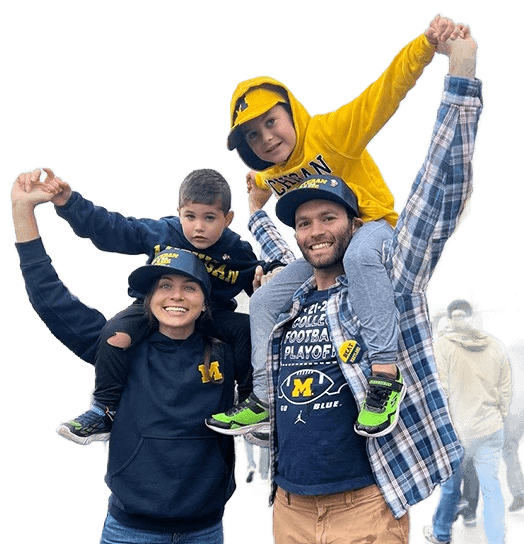
Veteran service organizations face a measurement challenge. The outcomes that matter most (reduced isolation, renewed purpose, family reconnection, community belonging) are difficult to quantify.
Unlike job placement programs that can count employment, or housing programs that can count roofs, experiential programs deal in something harder to measure: the texture of a life.
And yet the stakes are high. The veteran community faces documented challenges:
Veterans die by suicide each day
(VA National Suicide Prevention Report, 2025)
%
of those who die had no VA contact in the five years prior meaning they fell outside formal support systems
%
of military families report experiencing loneliness
(Military Family Advisory Network, 2023)
%
%
of post-9/11 veterans describe transition as challenging
That last statistic matters for understanding Vet Tix's role. More than half of veterans who die by suicide are unreached by the VA. Programs that meet veterans where they already are, in stadiums, at concerts, in their communities, may be reaching people that clinical systems cannot.
Against this backdrop, Vet Tix operates on a theory: that access to shared experiences, the simple act of attending a game, a concert, a show with people you love, can contribute to wellbeing in ways that complement clinical and formal support.
This study tests that theory against the experiences of 1,623 people actually living it, and surfaces both the evidence that supports it and the questions it leaves unanswered.
Numbers describe patterns. Stories give them meaning. This report weaves both together, but let's start with some of what we heard.
The 1,085 substantive open-ended responses we received covered a wide range of experiences. Some described reconnecting with civilian life. Others described reconnecting with family. Some described moments of joy. Others described something quieter: a shift in how they see themselves, or a reason to leave the house. Four voices, drawn from different parts of that range:
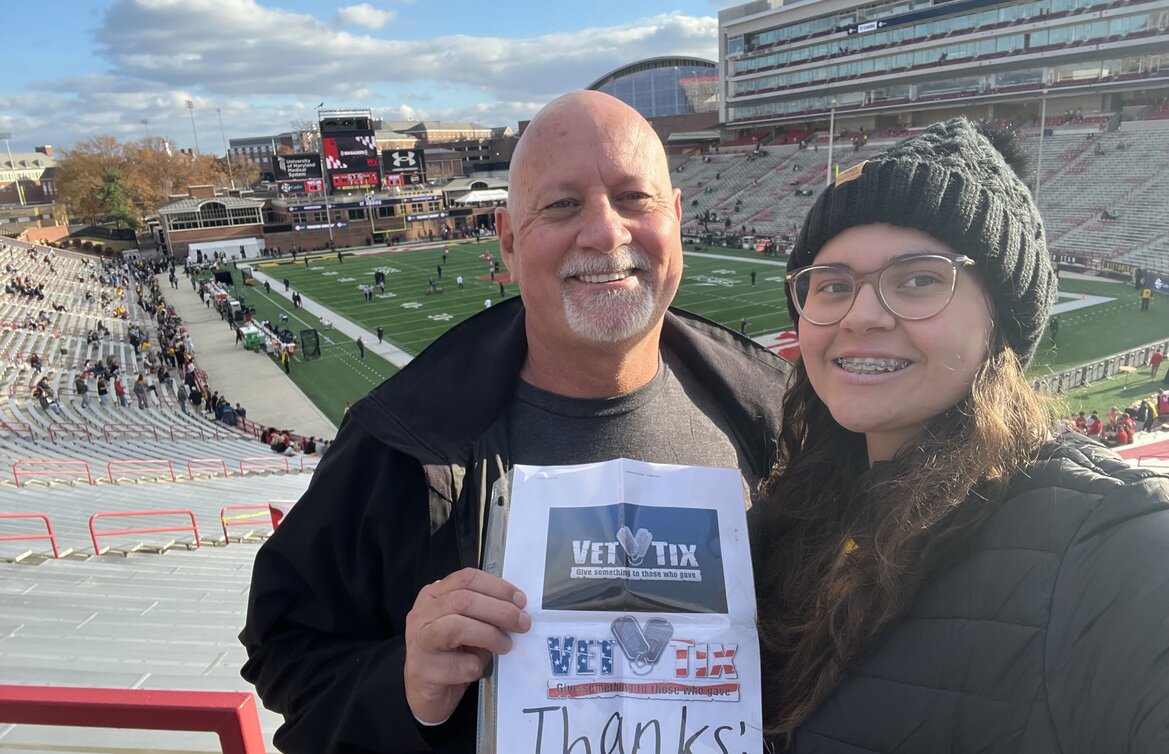
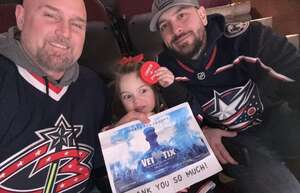
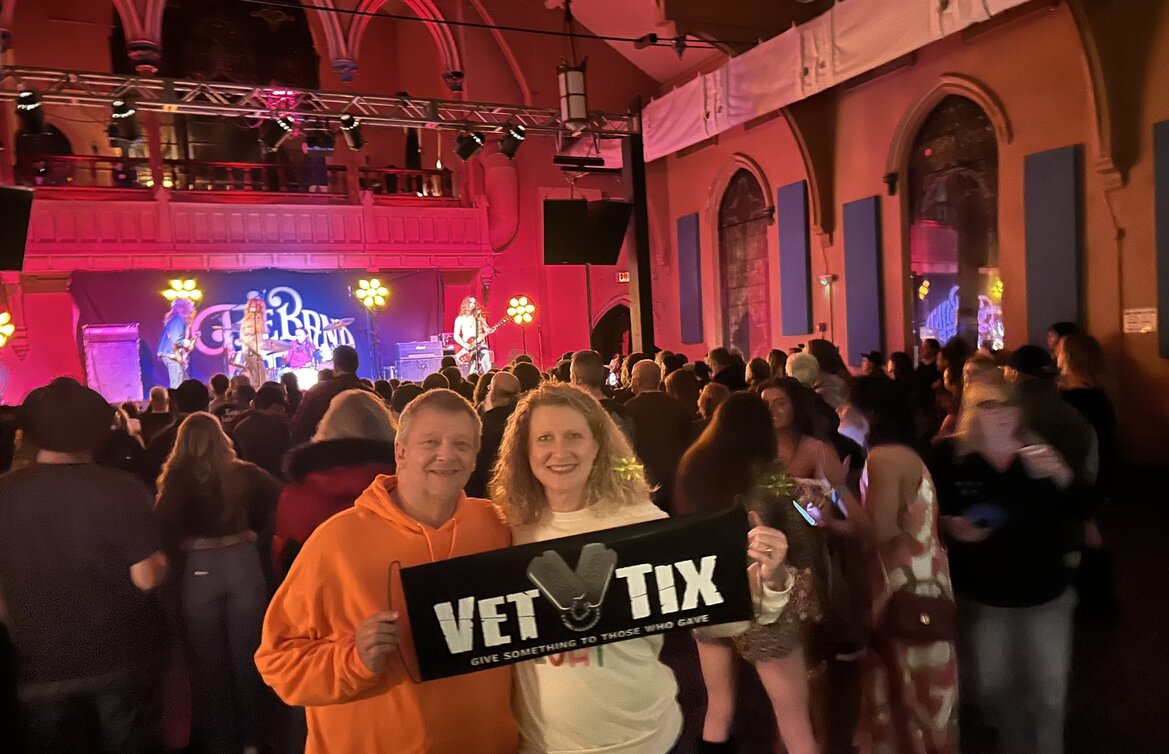
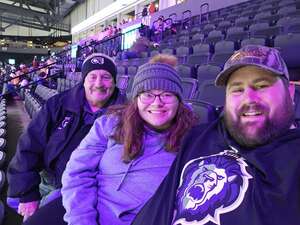
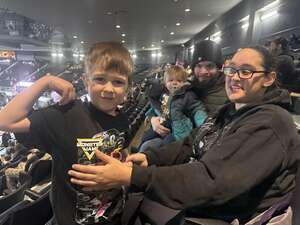
Upon returning home from deployment, there's always a period where you feel a bit out of place, like you're on the outside looking in, even though everyone is excited to see you and very welcoming. VetTix gave me the opportunity to spend quality time with my family and friends without having to talk too much about my experiences. It allowed me to simply enjoy the moment, have fun, and focus less on the challenges of transitioning back to civilian life.
There's also a big financial adjustment when coming home, waiting between pay periods and dealing with all the deductions can be tough. My family, friends, and I are all deeply grateful for your support, even if they don't always completely understand everything that comes with the transition.
– National Guard/Reserve, 45-54
insight
This Guard member names three things in a single response: the emotional displacement of coming home, the financial squeeze of transition, and the subtle loneliness of being surrounded by people who care but don't fully understand. Guard and Reserve members return directly to civilian communities without the built-in support of a military installation. They reported the highest transition impact in this study (85% vs. 68% overall)
insight
"Dating again." Two words that capture relationship renewal. This veteran is using events for three purposes at once: rekindling romance, one-on-one time with adult children, and finding community with fellow veterans. The ticket becomes a vehicle for multiple forms of connection.
— Veteran (Marine), 65+
— Veteran, 35-44, Houston
insight
Elsewhere in her survey, this veteran noted that parking at the symphony costs almost $20, more than her two tickets combined. For households where a concert is simply not in the budget, the ticket alone isn't enough. But it opens a door. Her daughter, she wrote, now "sees that the community supports veterans and feels compelled to serve and donate and volunteer." The access creates something beyond a single evening out.
insight
Note what this veteran doesn't claim. He doesn't say he's healed. He says the gesture, the recognition that someone understands his struggle, fills him with hope. His survey data tells its own story: he rated community connection a 10 out of 10, but new friendships a 0. He feels part of something. He hasn't yet found someone. That gap, between belonging and bonding, runs through this entire study. Hope is not recovery, but it may be a precondition for it.
— Veteran, 55-64, 20+ years of service

We asked respondents directly: "How has attending live events affected your overall well-being?" The question is intentionally broad. Wellbeing encompasses physical health, mental health, social connection, and general life satisfaction. Here's how they responded:
%
of respondents reported positive impact
%
more than half chose the strongest available option
%
Five respondents (less than 1%) reported any worsening.
This is a high number. For context, peer support and recreational therapy programs for veterans typically report positive satisfaction rates of 80-100%, and studies of arts and cultural engagement show wellbeing improvements in the range of 21-32%. The 90% figure sits at the high end of that range, which warrants both acknowledgment and appropriate skepticism. Several factors could contribute to this result:
Selection effect: People who respond to surveys are more engaged, and engaged members are likely having better experiences.
Recency bias: Recent positive experiences may color overall assessment.
Social desirability: Respondents may want to express gratitude.
We can't fully control for these factors. What we can say is that among the engaged members who responded, the perception of positive impact is strong and consistent across demographic groups.
Who Reports the Strongest Impact?
The "greatly improved" rate of 54% isn't uniform across the sample. When we disaggregate by key variables, patterns emerge:
Segment
Greatly Improved
Total Positive
All respondents
%
%
Attended 10+ events
%
%
Family "significantly" strengthened
%
%
Guard/Reserve members
%
%
Age 35-44
%
%
Age 65+
%
%
Two patterns stand out. First, veterans who report significantly strengthened family bonds show dramatically higher wellbeing improvement (79% vs. 54% baseline), the strongest correlation in the dataset. Second, those who attend more events report better outcomes (73% for 10+ events vs. 50% for 1-2 events). Both patterns are significant enough to warrant their own sections. Let's start with family.
If there's a single finding that emerges most clearly from this study, it's the centrality of family. This shows up in three ways:
1
%
report that events strengthened their family bonds, with half saying "significantly." For context, the American Association for Marriage and Family Therapy reports that approximately 75% of couples receiving formal marital therapy show relationship improvement. A satisfaction survey isn't a therapy trial, but the comparison is worth noting: the rate of reported family strengthening here is high by any standard.
2
When we cross-tabulated family bond strengthening with wellbeing improvement, a striking pattern emerged:
Family Bonds
Greatly Improved Wellbeing
Any Improvement
Significantly strengthened (n=767)
%
%
Somewhat strengthened (n=567)
%
%
No change (n=138)
%
%
Not applicable (n=67)
%
%
Important caveat: Correlation is not causation. This could mean (A) events strengthen families, which improves wellbeing; (B) people with better wellbeing attend more and feel better about everything; or (C) both are driven by a third factor like social support or financial stability. We can't determine causality from survey data, but the association is real and consistent.
3
When we analyzed the 1,085 open-ended responses about memorable experiences (those with substantive text), family was the most frequently mentioned theme, and it wasn't close:
Themes
Mentions
% of responses
Family/Children
%
Emotional Impact
%
Concerts / Music
%
Sports Events
%
Connection/Bonding
%
Responses could contain multiple themes. Percentages reflect keyword-based thematic coding and do not sum to 100%.
Family was mentioned nearly 50% more often than concerts or sports. The question was open-ended and didn't prompt for any particular topic. People chose to talk about taking their daughter to a first show, reconnecting with a spouse, or watching their son's face in a crowd. The product is a ticket. The experience, for most respondents, is family.
— Veteran, 35-44. Reported greatly improved wellbeing and significantly strengthened family bonds.
insight
What stands out here is not that the event was enjoyable. It's that a veteran managing severe PTSD describes not understanding the value of family time until he experienced it. One event shifted his perspective enough to establish an annual tradition that didn't exist before. For the 14-24% of VA-connected veterans living with PTSD, this kind of reframing, discovering what your family needs from you, may matter more than any single outing. This respondent also noted separately that the experience made him "more willing to be out in public again."
— Veteran, 35-44, 5-10 years of service. Community connection: 10/10. Reported greatly improved wellbeing and significantly strengthened family bonds.
insight
This quote surfaces something that doesn't show up in the quantitative data: dignity. Access to events matters, but so does how that access is delivered. This veteran values that the program doesn't make him feel like a recipient. For sponsors and program designers, that's a design principle, not a footnote. How you give matters as much as what you give. This same respondent described elsewhere how a neighbor (a former Marine) introduced him to Vet Tix, and both families now attend events together, a small example of how one ticket can ripple outward into broader community connection.
Beyond family, we explored how events affect veterans' sense of community. We asked respondents to rate two statements on a 0-10 scale, on average respondents rated the following statements:
"Attending live events has helped me feel more connected to my community."
"I have made new friends or meaningful connections at these events."
The first number is high -- 80% gave scores of 8, 9, or 10, with more than half (53.5%) giving a perfect 10. For context, the World Happiness Report, using a similar 0-10 scale, reports that the world's happiest countries (Finland, Denmark, Iceland) score approximately 7.6-7.8. The U.S. average hovers around 6.7-7.0. Veterans in this study rated their community connection higher than citizens of the world's happiest nations rate their overall life satisfaction. That's a remarkable number and it reflects how strongly these respondents feel about the community Vet Tix creates.
But the second number tells a different story. While 6.63 is above the midpoint, it's nearly two full points lower than community connection. The gap between these scores is meaningful.
the connection gap
Sociologists distinguish between two types of social capital. Bridging capital connects us to broader networks and communities. It's what makes us feel like we belong to something larger. Bonding capital creates close, reciprocal relationships to the people who would help you move apartments or call to check in when you're struggling.
What the data suggests is that Vet Tix excels at building bridging capital and amplifies that sense of belonging to the veteran community, of being recognized and valued, of feeling connected to something meaningful. But the bonding capital, the actual friendships, the phone numbers exchanged, the relationships that persist after the final whistle, isn't forming at the same rate.
This isn't a criticism. It's an opportunity. And 66 survey respondents told us exactly what they want when asked what they'd change or add: variations on "help us connect with each other" appeared repeatedly. Requests included designated veteran seating sections, pre-event meetup areas, in-app community features, and post-event connection opportunities.
— Veteran, 35-44
— Veteran, 45-54
We asked respondents to identify the primary improvement they'd experienced since attending live events. This was a single-selection question:
Improvement Area
Respondents
% of respondents
Improved Mood
%
Reduced symptoms of depression, anxiety, or
PTSD
%
Reduced feelings of isolation
%
Increased sense of belonging
%
None of the above
%
Important note: These are self-reported perceptions, not clinical assessments. We want to be clear about what this data can and cannot tell us: these respondents believe they've experienced improvement. Whether that belief would be validated by clinical measurement is unknown.
90% of respondents selected some form of improvement. 23% identified PTSD, depression, or anxiety symptom reduction as their primary improvement.
That said, self-reported improvement matters. It indicates that veterans perceive events as contributing to their mental health, which affects how they engage with the program and what value they assign to it. For context, meta-analyses of gold-standard PTSD therapies like Cognitive Processing Therapy and Prolonged Exposure find that only 28-40% of military patients achieve meaningful clinical improvement. A community program where 23% of respondents identify PTSD/depression/anxiety symptom reduction as their primary improvement is operating in a range that clinical researchers would find noteworthy; even accounting for the difference between self-report and clinical measurement.
— Veteran, 35-44
insight
Insight: "I forgot all of my problems." This respondent isn't claiming to be cured. He's describing respite: a few hours where PTSD symptoms didn't dominate. For someone managing chronic symptoms, temporary relief has value even when it doesn't constitute treatment. Research on live event attendance found that just 20 minutes of concert engagement increased wellbeing by 21%. This quote describes exactly that mechanism.
insight
Insight: "Slowly being able to come out of my shell." The language of gradual change, not sudden healing but incremental movement. This veteran names something specific: he attends 10+ events per year, and he sees each one as a step in re-integration. His framing ("the more we go, the better off my mental health will become") mirrors the dosage pattern we see in the data. He's also one of the few respondents who explicitly connects repeated attendance to a mental health trajectory, not just a single good night.
— Veteran, 35-44
— Veteran, 55-64
insight
Insight: Note the sequence this veteran describes. He made major life changes first. Then Vet Tix "reinforced" them. He's not crediting the program with his recovery. He's crediting it with sustaining momentum he'd already built. That's a more modest and more credible claim than "events fixed me," and it aligns with the section's framing: events complement other forms of support rather than replacing them.
Important context: Vet Tix is not a clinical intervention and shouldn't be evaluated as one. Events don't replace therapy, medication, or professional mental health support. What the data suggests is that some veterans find value having structured opportunities to engage socially, and that this may complement other forms of support.
One of the clearest findings in our data: veterans who attend more events report better outcomes across nearly every metric we measured.
Metric
1-2 Events
3-5 Events
6-10 Events
10+ Events
"Greatly Improved" Wellbeing
%
%
%
%
Family "Significantly" Strengthened
%
%
%
%
Created New Relationships
%
%
%
%
Community Score (mean)
From 1-2 events to 10+ events, the rate of "greatly improved" wellbeing rises by 23 percentage points. The steepest gains occur between 1-2 events and 3-5 events (+9pp), suggesting that the priority should be converting one-time attendees into repeat participants.
Causation caveat: This pattern could mean more events lead to better outcomes. But it could also mean people who are doing better attend more events, or that both are driven by other factors (like available time, social support, or proximity to venues). The correlation is clear; the causal direction is not.
Regardless of interpretation, the implication for program design is similar: strategies that support repeat engagement, not just initial access, may be important to maximizing impact.
We asked: "Do you feel attending live events has helped with your transition from military to civilian life?"
%
report that events helped with their transition, split evenly between "significantly" and "somewhat."
Transition from military to civilian life is widely documented as challenging. Research indicates that
%
-
%
of post-9/11 veterans describe transition as difficult
%
of those with PTSD find transition challenging
per 100,000
suicide rate in first year after separation (highest-risk period)
Guard/Reserve: A Higher-Need Population
When we isolated National Guard and Reserve members, the numbers were notably higher:
Guard/Reserve members
%
report transition help
%
report transition help
Gap
pp
significant gap
The gap is substantial, but the headline number understates what's happening. The 85% vs. 68% difference is real, but the more striking finding is at the other end of the scale: among Guard/Reserve respondents, not one selected 'no noticeable impact.' Among everyone else, 13% did. When we exclude respondents who marked the question as not applicable and look only at those for whom transition is relevant, Guard/Reserve members report 100% positive impact compared to 84% for all others.
Guard and Reserve members face a unique challenge: they return directly to civilian communities rather than military installations, without the built-in support infrastructure that active duty members have access to. The data suggests that for this population, the program isn't producing a somewhat better result — it's producing a universally positive one. Every Guard/Reserve member who considers transition relevant to their experience says events helped.
A caveat: the Guard/Reserve sample is small (n=54, with 46 responding to the transition question after excluding 'not applicable'). A handful of different responses would change the picture. But a zero percent 'no impact' rate in any subgroup is unusual enough to warrant attention.
Research from RAND Corporation identifies 'lack of military community support' as a primary barrier for this population. USO research found that 50% of National Guard families and 43% of Reserve families feel their civilian community lacks resources for military families.
— National Guard/Reserve, 45-54
insight
The phrase "bridge between two worlds" captures something important. Guard and Reserve members straddle military and civilian identities more continuously than active duty members. Events that connect them to both communities simultaneously may be particularly valuable.
We asked respondents about challenges they face when attending events.
Percentages based on 927 substantive responses. Responses can match multiple themes.
%
Specifically mentioned crowd anxiety or PTSD-related challenges. What makes this number more striking: analysis of all open-ended responses found 135 respondents who described anxiety, PTSD, or crowd-related barriers to event attendance. But fewer than 10 explicitly suggested sensory accommodations when asked what they would change. The need is far larger than the explicit request. Most veterans describe the struggle without framing it as something venues could fix.
— Veteran, 45-54
insight
This respondent tried. They left early, but they made the attempt, and they're still engaged enough to share their experience. This suggests there are veterans who want to participate but need additional support: sensory accommodations, advance notice of loud sounds, seating near exits, or other accessibility features.
— Veteran managing crowd anxiety
insight
A different perspective: a veteran who describes events as helping them learn to manage crowd anxiety, using the events as a form of gradual exposure. For some, the challenge becomes part of the growth.
The 5% who mentioned mobility issues represent another opportunity. Physical accessibility remains a barrier for some veterans, and addressing it could expand who benefits from the program.
The data points toward six areas where Vet Tix can deepen impact. Each one is grounded in a specific finding from this study.
1
Community connection scores 8.58 out of 10. New friendships score 6.63. That gap, nearly two full points, is the difference between feeling like you belong and actually knowing someone who would check in on you. Dozens of respondents requested ways to meet other veterans at events: veteran seating sections, pre-event gathering areas, in-app community features, post-event connection tools. The demand exists. The infrastructure doesn't yet.
Pre-event veteran meetups in venue areas
Designated "veteran sections" that facilitate interaction
Post-event social opportunities
Digital tools to connect attendees before/after events
How to measure it: Compare community and friendship scores for veterans in designated veteran sections vs. general admission. Track whether the gap narrows over time.
2
The steepest improvement in wellbeing happens between 1-2 events and 3-5 events (+9pp). After that, gains continue but more gradually. The strategic priority isn't just getting veterans through the door. It's getting them back. Retention strategies, re-engagement campaigns for lapsed members, and removing friction from repeat attendance may matter more than expanding first-time access.
What happens to veterans who attend once and don't return?
Can we identify and re-engage lapsed members?
What encourages transition from occasional to regular attendance?
3
Veterans who report significantly strengthened family bonds are nearly five times more likely to report greatly improved wellbeing than those reporting no change (79% vs. 17%). That's the strongest correlation in the entire dataset. Family isn't a side benefit. It's the core mechanism. Curating family-friendly events, positioning tickets as "date nights" or "family outings," and tracking family attendance as a key metric would align programming with what the data says matters most.
Curating explicitly family-friendly events
Positioning events as "date nights" or "family bonding time"
Targeting messaging around family connection benefits
Tracking family attendance as a key metric
4
135 respondents described anxiety, PTSD, or crowd-related barriers to attending events. Fewer than 10 suggested sensory accommodations when asked what they'd change. The need is far larger than the explicit request, because most veterans describe the struggle without framing it as something venues could fix. Advance notification of loud sounds, seating near exits, quiet spaces, and PTSD-informed event guides are straightforward accommodations that could make the difference between a veteran who leaves at halftime and one who stays.
Partner with venues on sensory accommodations (quiet spaces, reduced stimulation areas)
Provide advance notification of fireworks, loud sounds, or pyrotechnics
Offer seating options near exits for easy departure
Develop PTSD-informed event guides
Create accessibility resource packages for high-demand venues
5
85% of Guard/Reserve respondents say events helped with transition, compared to 67% of all others. Not a single Guard/Reserve respondent selected "no noticeable impact." They return directly to civilian communities without the support infrastructure of military installations, and the data suggests Vet Tix is filling a gap that other systems miss. Targeted outreach to Guard/Reserve units, partnerships with their family support organizations, and events in communities with high Guard/Reserve populations could reach a population that clearly benefits.
Targeted outreach to Guard/Reserve units
Partnerships with Guard/Reserve family support organizations
Events in communities with high Guard/Reserve concentrations
Content addressing the specific "between two worlds" challenge
Vet Tix asked us to help them understand their impact, identify gaps, and find opportunities. Based on 1,623 survey responses, here's what we found:
IMPACT
Among engaged members who responded, reported impact is high. 90% say events positively affected their wellbeing. 86% report strengthened family bonds. The family finding is particularly striking: veterans who report significantly strengthened family bonds are nearly five times more likely to report greatly improved wellbeing than those reporting no change (79% vs. 17%), the strongest correlation in the entire dataset. Veterans describe experiences ranging from temporary respite to relationship renewal to restored hope.
GAPS
Community connection is strong, but friendship formation lags (8.58 vs. 6.63). 15% of respondents who described challenges cite anxiety or PTSD-related barriers. 62% of respondents attended two or fewer events in the past year, and the data shows the steepest wellbeing gains happen between one-time and repeat attendance. Guard/Reserve members show the highest transition impact (85% vs. 67% for all others), suggesting they may be underserved by other support systems.
OPPORTUNITIES
Facilitate veteran-to-veteran connection. Support repeat engagement. Double down on family programming. Address accessibility barriers. Target Guard/Reserve populations. Leverage the professional connections threshold that emerges at sustained attendance levels.
This study establishes a baseline. The patterns identified here, the dosage effect, the connection gap, the Guard/Reserve differential, the family-wellbeing linkage, deserve tracking over time, ideally through a validated measurement instrument that can capture change rather than a single snapshot. The goal is not to prove that Vet Tix works. It's to understand how it works, for whom, and what would make it work better.
— Veteran, 55-64
We can't verify such claims. We can note that veterans believe them. And we can observe that across 1,623 responses, something consistent emerges: people finding value in shared experiences, in moments of joy and connection, in the simple act of attending an event with people they love or among a community that recognizes them.
At IMPCT Group, we partner with enterprises to build impact programs that don't just do good—they drive measurable business results.
Using aggregated data, industry expertise, and proprietary insights, we develop outcome-led strategies that align performance with purpose, with a specialized focus on creating economic opportunity for military communities.
Our approach transforms impact from a cost center into a competitive advantage, delivering tailored solutions that strengthen military communities while powering sustainable growth for your business.
Before using these findings, readers should understand what this data can and cannot tell us.
This is a satisfaction survey of Vet Tix members. We captured self-reported perceptions from veterans who:
Are registered Vet Tix members
Received the survey invitation via email and chose to respond
Had experiences they considered worth reporting
This is a meaningful population, but it's not a representative sample of all veterans or even all Vet Tix members. It's worth noting that 31% of respondents reported attending zero events in the past 12 months, meaning the sample includes a range of engagement levels, not just frequent attendees.
The survey was administered online via email distribution in October and November 2025. All 1,623 responses were completed submissions.
We don't hear from:
Veterans who tried Vet Tix once and didn't return
Members who requested tickets but never used them
Those who had negative experiences and disengaged
The vast majority of members who didn't respond to this survey
We didn't measure:
Clinical outcomes (no diagnostic assessments)
Objective behavioral changes (only self-report)
Comparison to non-members or control groups
Changes over time (single point-in-time snapshot)
Selection bias: Results likely skew positive. People who respond to surveys are more engaged, and engaged members are likely having better experiences. That said, nearly a third of respondents attended no events in the past year, which means this isn't exclusively a "super-fan" sample.
Correlation, not causation: We observe associations (e.g., family bonds and wellbeing) but cannot determine what causes what. The strongest correlation in this study (family bond strengthening and wellbeing improvement) could run in either direction or be driven by a third factor.
Self-report limitations: Respondents may overstate positive experiences (social desirability) or misremember (recall bias).
Generalizability: Findings describe this sample, not all veterans or all Vet Tix members.
This data is appropriate for:
Understanding how engaged members perceive their experience
Establishing a baseline for future measurement
Generating hypotheses about program impact
Informing program design decisions
Sharing member voices and stories
This data is not appropriate for:
Making clinical claims about health outcomes
Generalizing to all veterans
Proving causal relationships
survey design
The survey instrument included 25 questions across several categories:
Demographics (military status, years of service, age group)
Event attendance patterns (frequency, who attended with)
Outcome measures (wellbeing change, family bonds, transition help)
Connection measures (0-10 scale ratings for community connection, new friendships, relationship improvement, and sense of purpose)
Open-ended questions (memorable experiences, challenges, suggestions)
Questions were developed in consultation with Vet Tix staff and reviewed for clarity and neutrality. The survey was administered online via email distribution to members in October and November 2025.
sample
Characteristic
Count
Percentage
Total Respondents
%
Military Status (n=1,606)
Veteran
%
Active Duty
%
National Guard/Reserve
%
Family Member
%
Other/Caregiver
%
Age Group (n=1,573)
Under 25
%
25 - 34
%
35 - 44
%
45 -54
%
55 -64
%
65+
%
Years of Service (n=1,543)
Less than 1 year
%
1-4 years
%
5-10 years
%
11-20 years
%
20+ years
%
Analysis methods
Quantitative analysis: Descriptive statistics (frequencies, means, medians), cross-tabulations, chi-square tests for independence, t-tests for mean comparisons, effect size calculations (Cramér's V).
Qualitative analysis: Thematic coding of open-ended responses, frequency counts of themes, quote extraction for representative examples.
Software: Python (pandas, scipy) for statistical analysis; manual review for qualitative coding.
key statistical tests
Test
Purpose
Result
Chi-square (collapsed categories)
Association between family bond strengthening and wellbeing improvement
x2 = 566.1, p < 0.001, Cramer's V = 0.429
Two-proportion z-test
Whether the gap in wellbeing between family-strengthened and family-unchanged groups is statistically significant
z = 14.46, p < 0.001
Paired t-test
Whether community connection (8.58) and new friendships (6.63) are meaningfully different for the same respondents
t = 26.85, p < 0.001, Cohen's d = 0.69
Spearman rank correlation
Whether attending more events is associated with better wellbeing outcomes
rho = 0.185, p < 0.001
What these tests tell us
Every "p < 0.001" in the table above means the same thing: the pattern we observed is extremely unlikely to be a coincidence. If there were no real relationship between these variables, you'd see results this strong less than one time in a thousand by chance alone.
But "real" and "large" are different things, and this is where the results get interesting.
The family-wellbeing connection is the study's strongest finding by a wide margin. The chi-square test confirms a large association (Cramer's V = 0.429) between family bond strengthening and wellbeing improvement across the full response distribution. The z-test sharpens the point: veterans who report significantly strengthened family bonds are nearly five times more likely to report greatly improved wellbeing than those reporting no change (79% vs. 17%). That 62-percentage-point gap isn't a statistical artifact. Whatever is happening between family experiences and personal wellbeing, it's substantial.
The connection gap, the nearly two-point difference between community belonging (8.58) and actual friendships (6.63), is also a strong finding. These scores come from the same people rating the same experiences, so a paired test is the right tool. Cohen's d of 0.69 says this gap is meaningful, not just measurable. Veterans consistently feel more connected to their community than connected to specific individuals within it.
The dosage pattern, more events associated with better outcomes, is real but modest. The Spearman correlation of 0.185 means event attendance explains roughly 3% of the variation in wellbeing. The cross-tab percentages (50% "greatly improved" at 1-2 events, 73% at 10+) paint a dramatic picture, and they're accurate. But the correlation tells a fuller story: attendance is one ingredient, not the whole recipe.
This section provides complete data tables for reference and further analysis.
Wellbeing Change Distribution (n=1,571)
Response
Count
Percentage
Greatly improved
%
Somewhat improved
%
No change
%
Somewhat worsened
%
Greatly worsened
%
B. Family Bonds Distribution (n=1,570)
Response
Count
Percentage
Yes, significantly
%
Yes, somewhat
%
No change
%
Not applicable
%
C. Transition Help Distribution (n=1,575)
Response
Count
Percentage
Yes, significantly
%
Yes, somewhat
%
Not applicable to my situation
%
No noticeable impact
%
D. Numeric Scale Distributions (0-10)
Measure
Mean
Median
Std Dev
n
Community Connected (0-10)
New Friends (0-10)
Improved Relationships (0-10)
Sense of Purpose (0-10)
E. Events Attended Distribution (n=1,578)
Events in past 12 months
Count
Percentage
1-2 events
%
3-5 events
%
6-10 events
%
More than 10 events
%
F. Dosage Cross-Tabulation
Metric
None
1-2
3-5
6-10
10+
Greatly Improved Wellbeing
%
%
%
%
%
Family Significantly Strengthened
%
%
%
%
%
Created New Relationships
%
%
%
%
%
Transition Positive (incl N/A)
%
%
%
%
%
Community Score (mean)
%
%
%
%
%
Friends Score (mean)
%
%
%
%
%
G. Who Attended With (n=1,553
Companion
Count
%
Spouse/partner
%
Children
%
Friends (military-connected)
%
Friends (non-military)
%
Other family members
%
Alone
%
H. Mental Health Improvement Selected (n=1,570)
Improvement
Count
%
Improved mood
%
Reduced symptoms of depression, anxiety, or PTSD
%
Reduced feelings of isolation
%
Increased sense of belonging
%
None of the above
%
New Ongoing Relationships (n=1,569)
Response
Count
%
Yes
%
No
%
Not sure
%
j. Professional Connections (n=1,558)
Response
Count
%
Yes
%
No
%
Not sure
%
K. Ticket Access (n=1,576)
Response
Count
%
Very easy
%
Somewhat easy
%
Neutral
%
Somewhat difficult
%
Very difficult
%
L. Community Support Perception (n=1,555)
Response
Count
%
Much more positive
%
Somewhat more positive
%
No change
%
Somewhat more negative
%
%
M. Open-Ended Response Rates
Question
Substantive Responses
%
Memorable experience
%
Identity/belonging influence
%
Challenges faced
%
What made it easier
%
Wishes/unmet needs
%
One thing to change
%
Anything else
%
N. Sample demographics
Military Status (n=1,606)
Veteran
%
Active Duty
%
National Guard/Reserve
%
Family Member
%
Other/Caregiver
%
Age Group (n=1,573)
Under 25
%
25 - 34
%
35 - 44
%
45 -54
%
55 -64
%
65+
%
Years of Service (n=1,543)
Less than 1 year
%
1-4 years
%
5-10 years
%
11-20 years
%
20+ years
%